Interesting fact
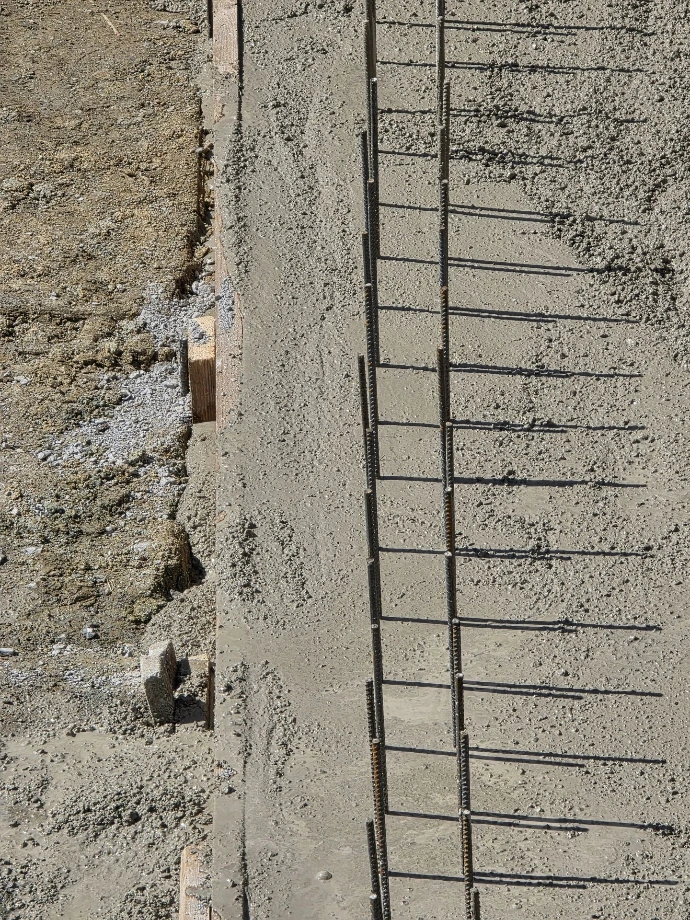
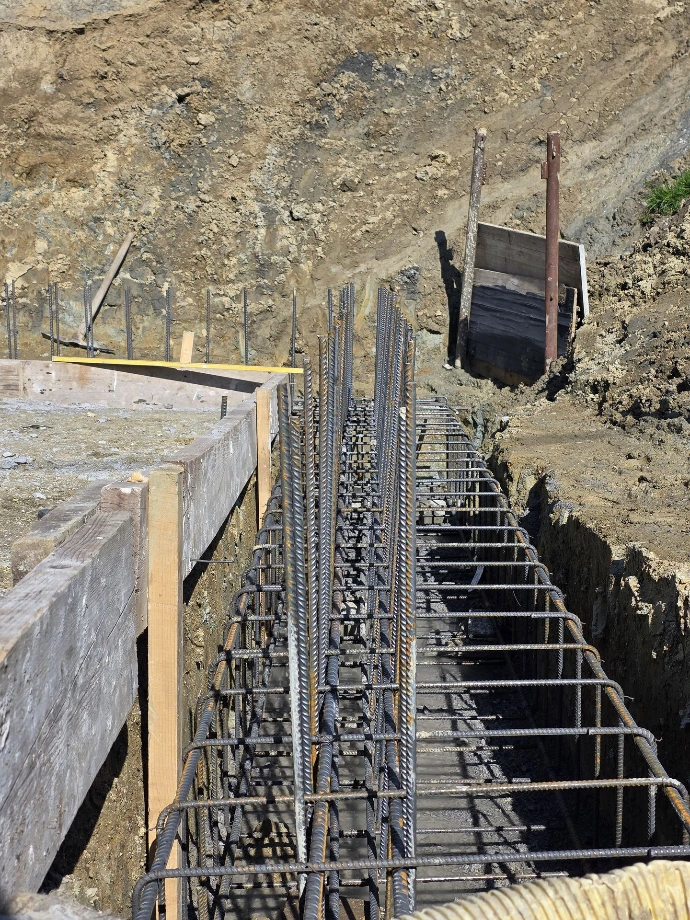
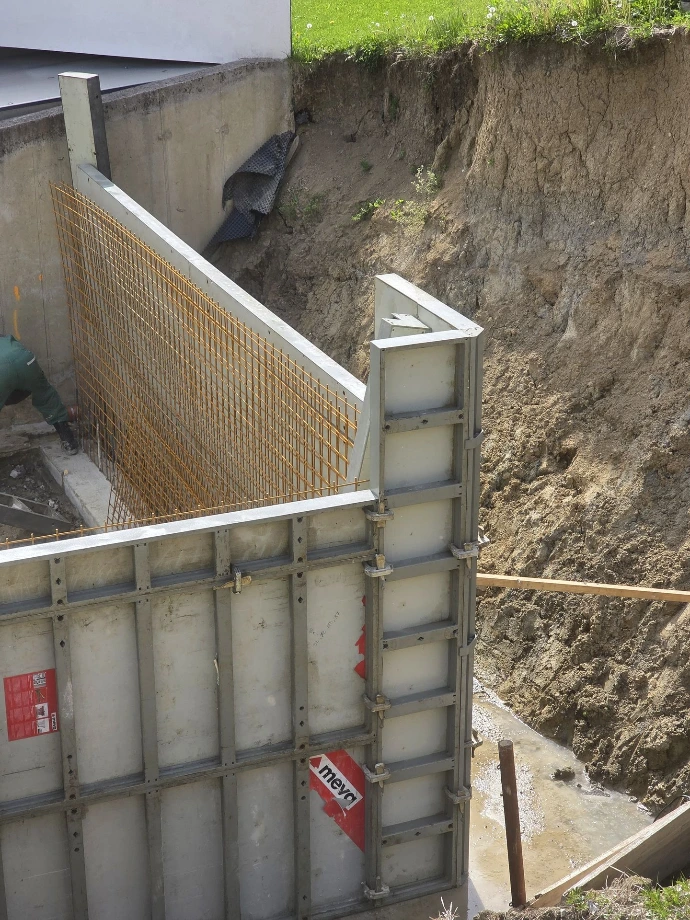
In retaining walls, the largest part of the structure is often hidden beneath the ground. The final visible concrete wall represents only a small part of the entire system, while stability is provided by extensive foundations, reinforcement, and drainage layers that remain unseen but crucially affect the safety and durability of the structure.
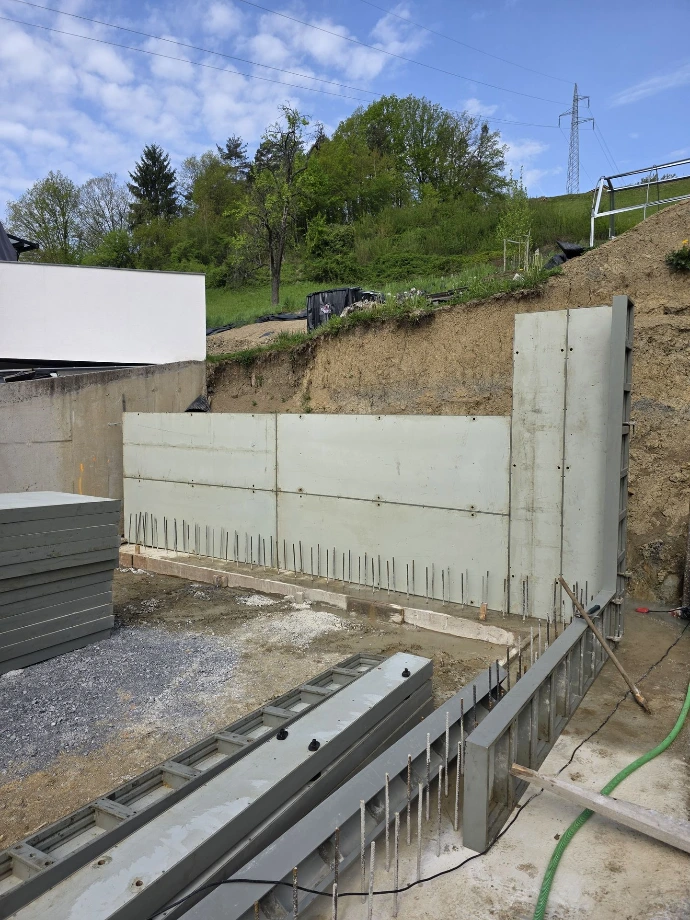
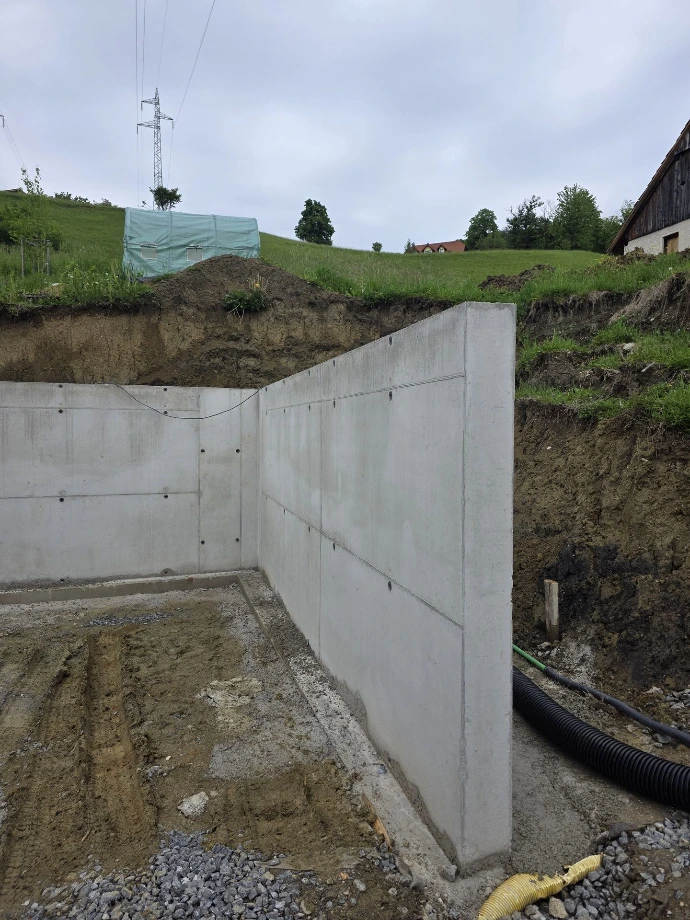
Building on uneven terrain often requires more than just a quality design of the structure. In this project, the key challenge was to ensure safe and long-term stabilization of the slope and to create conditions for further land development. The solution was a reinforced concrete retaining wall, designed to withstand large earth pressures and adapted to the challenging geological conditions of the site.
The project included the preparation of documentation for obtaining a building permit, static calculations, execution plans, and coordination between design and construction. Special attention was given to the sizing of the structure, drainage of backwater, and ensuring the long-term stability of the entire system.
Although the retaining wall often remains hidden behind a landscaped environment after construction is completed, it represents one of the most important structural elements on challenging terrains. Its role is not only to retain soil but also to protect the structure, prevent subsidence, and ensure the safety of the entire land.
In the project, we designed a massive reinforced concrete structure with deep foundations and precisely planned reinforcement, which allows for the absorption of large loads and ensures a long lifespan without additional interventions.